
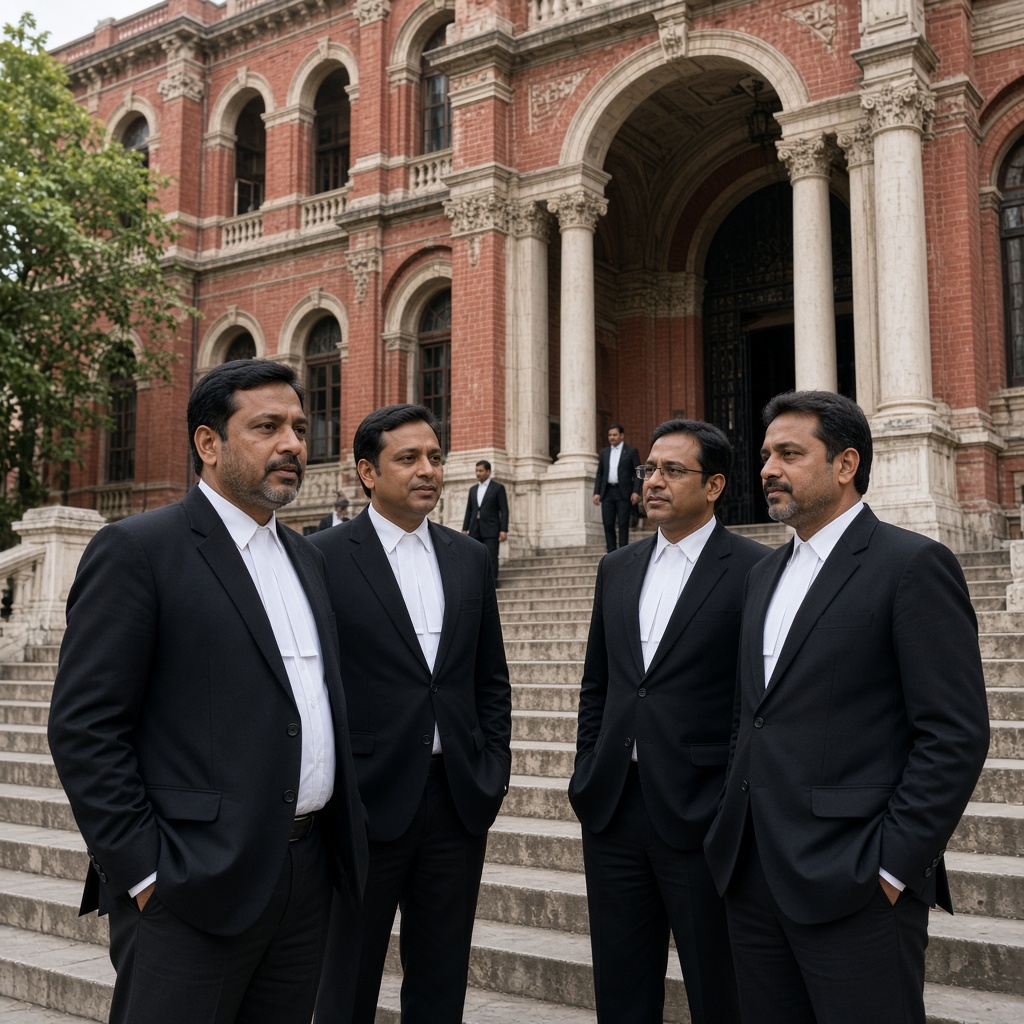
In brief
A High Court brief is a different kind of case: shorter hearings, a heavier record, and a remedy that is often a writ or an appeal rather than a fresh trial. We conduct that work across India, with counsel where the brief is listed outside our own appearance.
Discuss this matter
Writs
Petitions under Article 226, and the stay that sometimes has to come with them.
Appeals
From subordinate courts, tribunals, and quasi-judicial orders.
Reach
High Courts across India, and the road onward to the Supreme Court.
The brief
What clients ask us
Choose a question. The answer sets out the work we actually take in this practice, in plain language.
Answer
Article 226 is the High Court's own jurisdiction. It is the right route when the grievance is against the State, a tribunal, or an authority that has acted outside its power.
- Writ petitions under Article 226, filed and defended
- Interim relief and stay
- Public interest litigation, in a case that truly is one
What writs do you file?
Answer
Article 226 is the High Court's own jurisdiction. It is the right route when the grievance is against the State, a tribunal, or an authority that has acted outside its power.
- Writ petitions under Article 226, filed and defended
- Interim relief and stay
- Public interest litigation, in a case that truly is one
Do you appear in appeals from lower courts and tribunals?
Answer
Yes. The appeal is argued on the order below and the record that produced it. It is not a second chance to tell the story from the beginning.
- Appeals from subordinate courts
- Appeals from tribunals and quasi-judicial authorities
- Civil matters that reach the High Court
What criminal work reaches a High Court?
Answer
Bail, revision, and appeal are the ordinary criminal work of a High Court. Each one has its own standard, and the papers should be prepared for that standard.
- Criminal appeals
- Revisions
- Bail in the High Court
Can you take a matter toward the Supreme Court?
Answer
A Special Leave Petition is a separate proceeding, with its own limitation and its own test. We prepare it when the High Court order calls for it.
- Special Leave Petitions to the Supreme Court
- Advice on whether the order is one the Supreme Court is likely to entertain
Which subjects, and which High Courts?
Answer
The subject matter is as wide as the High Court's own docket. Appearance across the country is arranged through a working network of advocates, so the brief is not limited to one bench.
- Family, tax, company, and environmental matters
- Drafting and filing of the High Court papers
- Advice on strategy before the case is numbered
- A network of advocates for High Courts across India
The path
How a matter moves
01
The order below
We read the order, the limitation, and whether the remedy is a writ, an appeal, or a revision.
02
The record
Pleadings are drafted from the papers the High Court will actually page through.
03
Interim relief
If a stay is needed to stop the order from taking effect, that application is listed with the petition.
04
The hearing
The brief is argued in that High Court, and carried to the Supreme Court only when the order justifies it.
Before you instruct us
Questions on this practice
Do you appear in High Courts other than Calcutta?
Yes. Where we are not the advocate on record for that court, the brief is conducted with counsel who are. Strategy and drafting stay with us.
Is every grievance against the government a writ?
No. A writ is for a public law wrong. A private dispute, even with a public sector company, may still be a suit. We will say which one your facts support.
Can you seek a stay on the first day?
You can ask. The court grants it when the order below would cause harm that a later success cannot undo. The application has to show that harm.
What is the difference between an appeal and a revision?
An appeal reopens the decision on the grounds the statute allows. A revision is narrower: it looks at legality, jurisdiction, and propriety. We choose from the order, not from which word sounds stronger.
Will you tell me if a Special Leave Petition is a poor use of time?
Yes. An SLP filed because the client is unhappy, rather than because the order is one the Supreme Court will look at, spends limitation and costs for very little.
These answers describe the practice. They are not advice on the facts of your matter.
Next step