
Imagine getting a call that one of your best employees was arrested over the weekend. Your first thought? “What do I do now?” Employee-related criminal matters happen more often than you might think – arrests, charges, convictions – and create real headaches for employers. This guide explains simply what to do when employees face criminal problems, step by step, so you can protect your business while being fair.
Criminal Issues Create Workplace Chaos
Every 12 months, hundreds of employees get arrested – from DUIs to theft to home violence. These situations create safety concerns, prison dangers, and morale troubles. The large difficulty? Most employers panic and make incorrect movements like immediately firing (risking proceedings) or ignoring it (risking place of work safety). Small groups mainly battle without clear policies on employee arrests, crook convictions, or place of job criminal investigations.
What to do when an employee is arrested outside of work
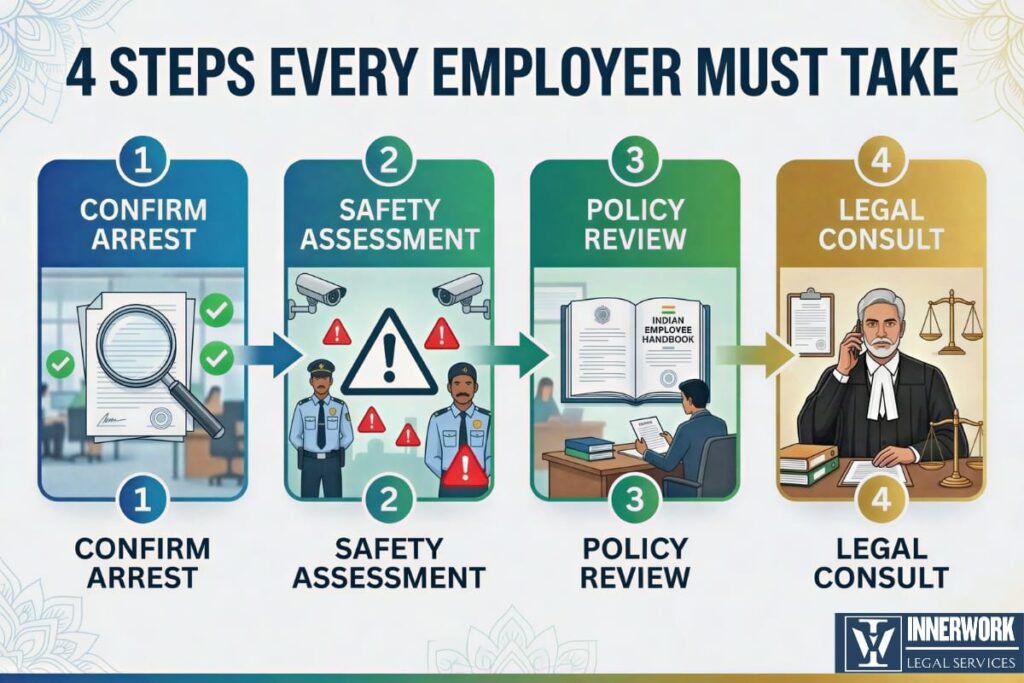
Step 1: Don’t panic, gather the facts
- Ask HR to confirm the arrest (court records, police report).
- Check if it affects work (conviction for theft for cashier = red flag).
- Speak to the employee privately: “We heard about the arrest. Can you explain?”
Step 2: Immediate actions
- Temporary suspension with payment pending investigation.
- Give up customer service duties if there are security issues.
- Document everything in writing.
Step 3: Legal Verification
- Review the company handbook policy for off-duty arrests.
- Consult an employment lawyer (generally a 30-minute conversation is sufficient).
How State Laws Affect Employers’ Actions After Employee Arrest
State laws vary widely:
- Some states (California) protect off-duty conduct – arrest alone is not enough to fire
- Others (Texas) give employers more freedom
- Ban-the-box laws prevent questions about criminal history on apps
- Main rule: follow your employment status at will + state laws. Always document the “business necessity” for any action.
Management of employees who are suspected or convicted of crimes
Suspicion phase:
- Never accuse directly – “We take accusations seriously”
- Conduct an internal investigation (HR + supervisor)
- Separate proof of work from hearsay
- Suspend pending investigation if there is a security risk
The sentencing phase:
- Review the relevance of the work (embezzlement for accountant = dismissal)
- Consider rehabilitation (first offense, probation completed)
- Check the EEOC guidelines for criminal convictions
- Offer options: job transfer, trial period
- Real Case: Restaurant fired waiter for marijuana conviction. Case lost because the sentence was 10 years and had nothing to do with serving time.
How Employers Should Respond: Accused, Charged, or Convicted
Three Clear Stages:
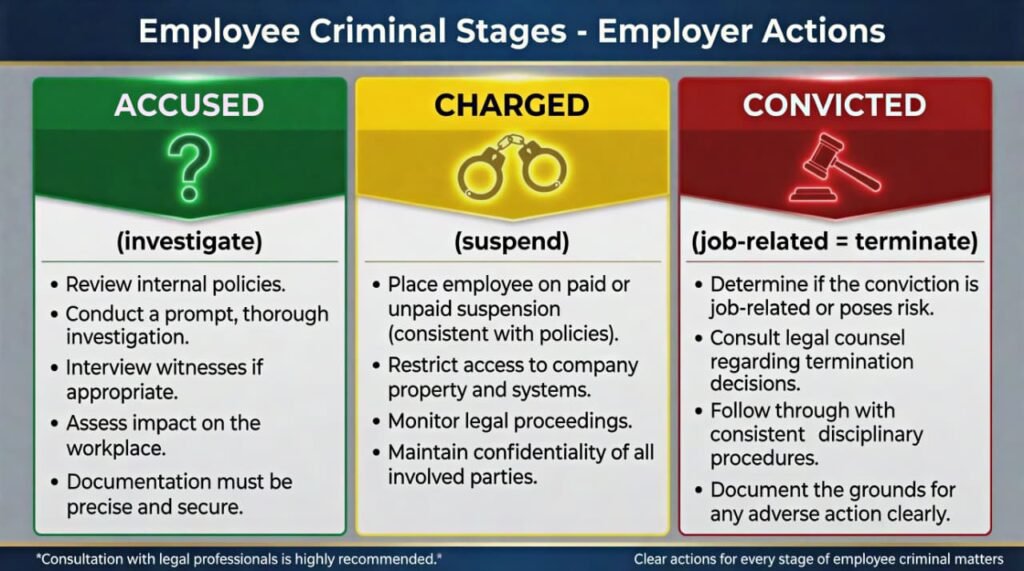
Pro Tip: Always give employee chance to respond before final decision.
Employee Arrested for Non-Work Related Crime – Criminal Investigation
When Police Come Knocking:
- Cooperate but protect privacy – “We can provide employment dates”
- Don’t share personnel files without legal advice
- Suspend contact with investigating officers through HR
Workplace Impact Assessment:
- Customer safety risk? Immediate suspension
- Reputational damage? Consider PR statement
- Team morale? Address staff concerns professionally
Example: Employee arrested for drug possession. If job involves driving company vehicles → suspend license immediately.
Why Following These Steps Works
Stats show smart handling pays off:
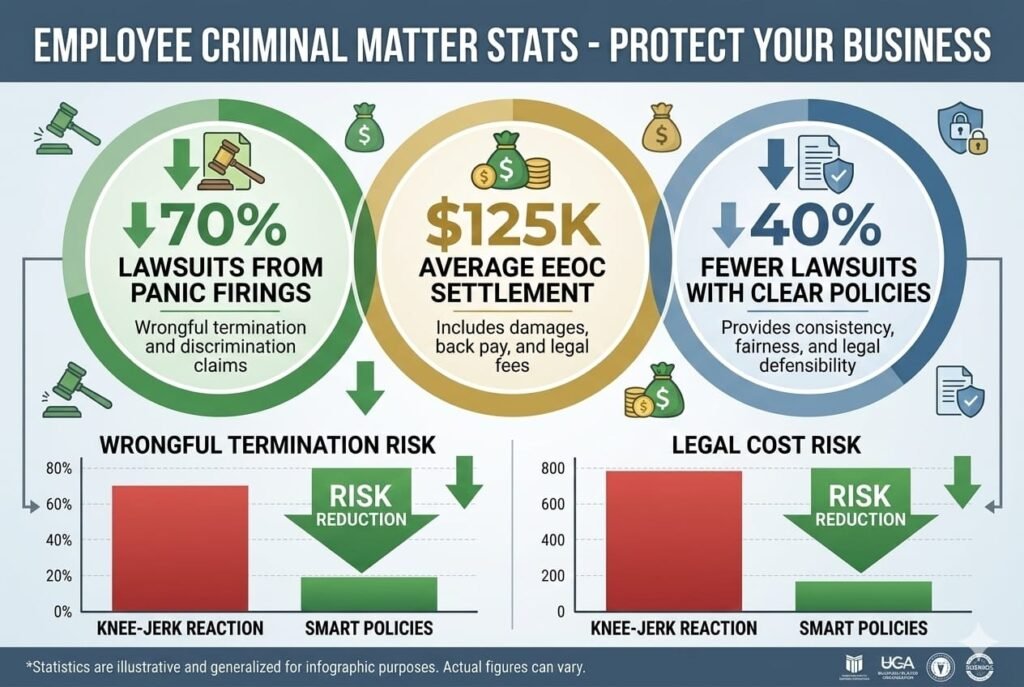
- 70% of wrongful termination lawsuits from knee-jerk firings after arrests
- Companies with clear criminal conduct policies face 40% fewer lawsuits
- EEOC settlements average $125,000 for mishandling criminal records
Real-World Proof: Walmart faced $9M EEOC settlement for blanket criminal background exclusions. Individual assessment policies = lawsuit protection.
Smart Handling Protects Your Business
Following these steps delivers:
Legal Protection – Documented decisions beat emotional reactions.
Employee Trust – Fair process keeps good workers.
Workplace Safety – Remove real threats without lawsuits.
Reputation Boost – Shows professional handling of tough situations.
Bottom Line: Proper process = fewer lawsuits + safer workplace.
Employee Arrest Crisis? Get Expert Help NowDon’t make costly HR mistakes.
Innerwork Legal Services helps employers handle arrests, charges, and convictions the right way.✅ Employee arrest response plans
✅ Workplace investigation guidance
✅ Custom termination policies
✅ Nationwide supportContact Innerwork Legal Services →
Handle criminal matters professionally – avoid lawsuits