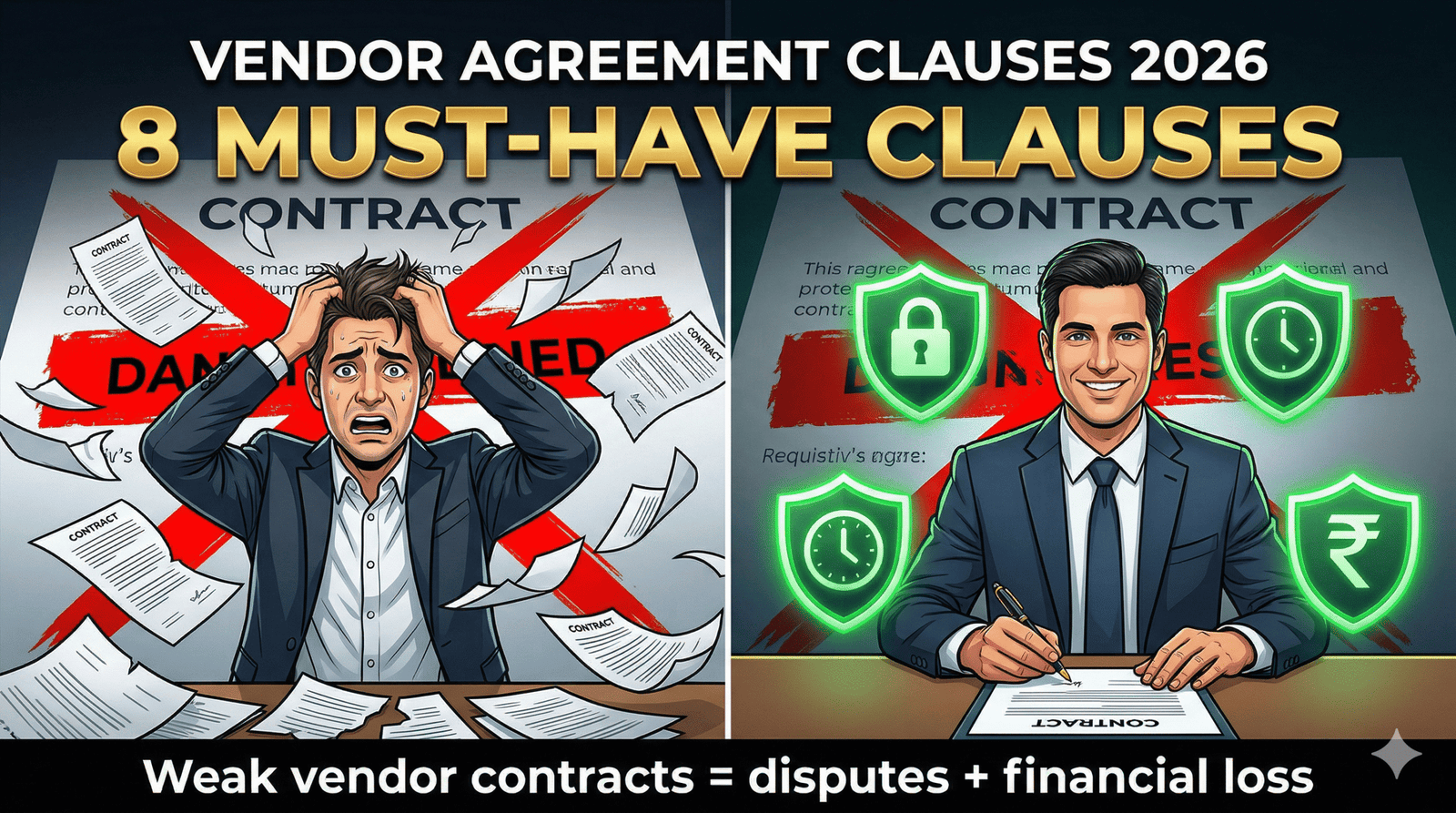
Are your vendor agreements protecting your business—or putting it at risk?
Have you ever started working with a vendor based on trust or a basic agreement, only to face delays, quality issues, or payment disputes later? It’s a common situation for growing businesses.
Many companies treat vendor agreements as a formality—but in reality, a poorly drafted agreement can lead to financial loss, legal disputes, and operational disruption.
The reality: Most businesses overlook critical contract details
A business once partnered with a supplier without clearly defining delivery timelines or quality standards. When issues arose, there was no legal ground to enforce accountability.
Situations like this are more common than expected.
A vendor agreement isn’t just paperwork—it’s a legal safeguard that defines expectations, responsibilities, and protections for both parties.
Why vendor agreements often fail
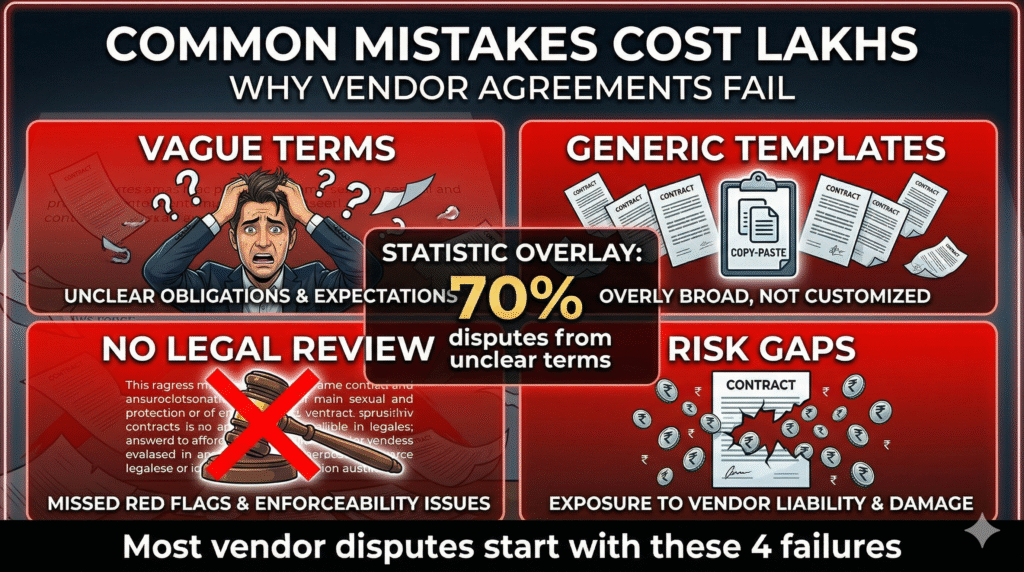
1. Vague or incomplete terms
Many agreements lack clarity on key areas such as scope, timelines, and deliverables.
Result: Misunderstandings and disputes
2. Over-reliance on generic templates
Using standard templates without customization ignores the specific needs of the business.
Result: Important risks remain uncovered
3. Lack of legal review
Agreements are often drafted without professional input.
Result: Weak enforceability
4. Ignoring risk management
Many contracts fail to include clauses that protect against delays, breaches, or losses.
Result: Limited legal protection
Now imagine working with vendors under a strong legal framework
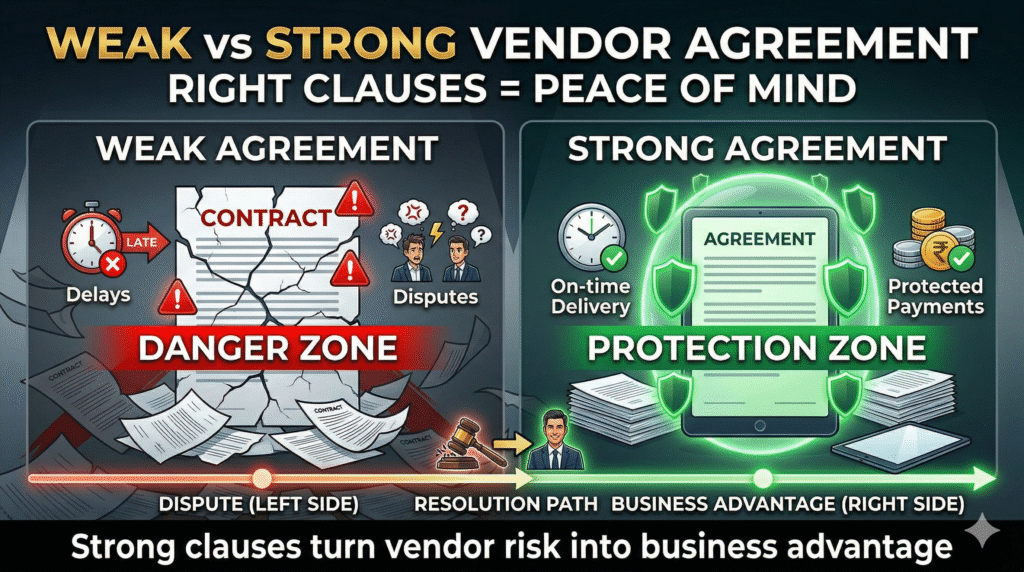
Think about having agreements where:
- Deliverables are clearly defined
- Payment terms are transparent
- Risks are properly managed
- Disputes can be resolved efficiently
This not only prevents conflicts but also strengthens business relationships.
Key clauses every vendor agreement must include
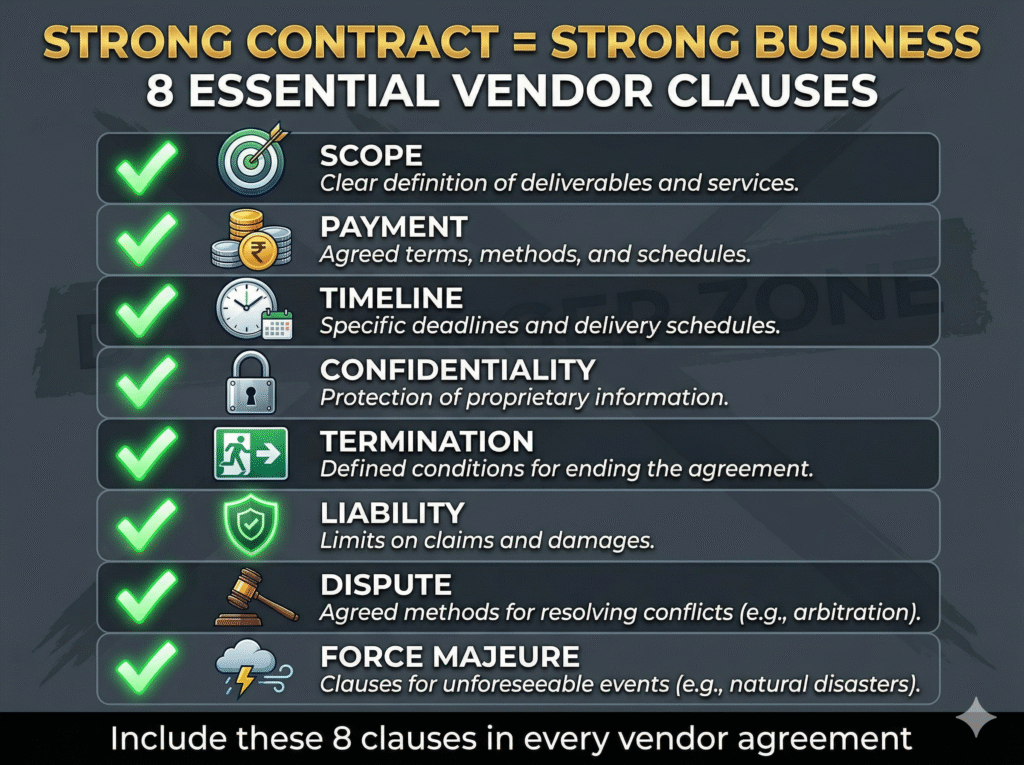
1. Scope of work
This defines what the vendor is expected to deliver.
It should include:
- Detailed description of services or products
- Quality standards
- Performance expectations
2. Payment terms
Clearly outline:
- Payment amount and schedule
- Invoicing process
- Late payment penalties
This avoids financial misunderstandings.
3. Delivery timelines
Specify:
- Deadlines
- Milestones (if applicable)
- Consequences of delays
4. Confidentiality clause
Protects sensitive business information shared with the vendor.
5. Termination clause
Defines:
- Conditions under which the agreement can be ended
- Notice period
- Obligations after termination
6. Liability and indemnity
This clause determines:
- Responsibility for damages
- Protection against losses caused by the vendor
7. Dispute resolution
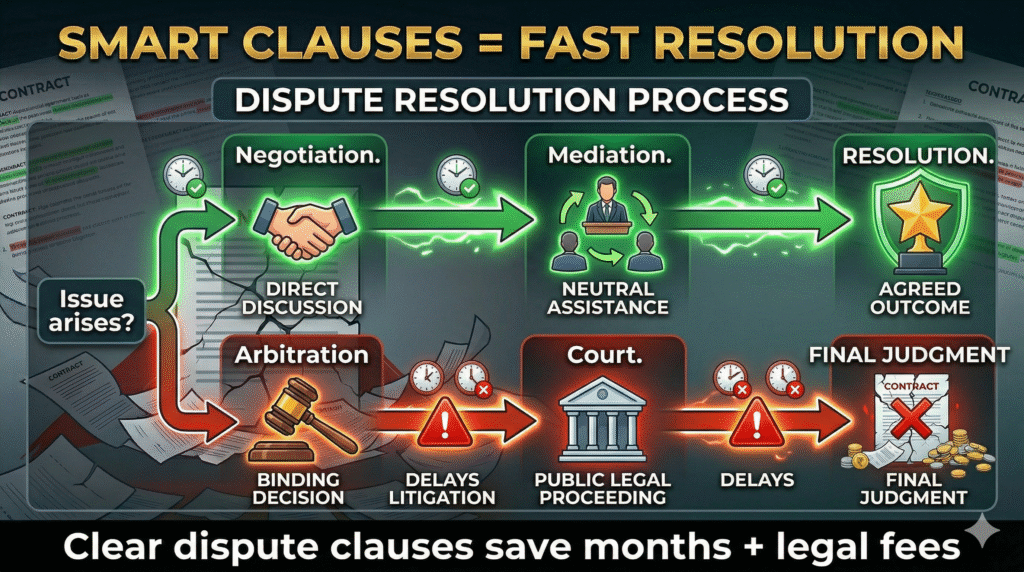
Specifies how conflicts will be handled, such as:
- Arbitration
- Mediation
- Jurisdiction
8. Force majeure
Covers unexpected events such as:
- Natural disasters
- Government restrictions
Ensures clarity during uncontrollable situations.
How to ensure your vendor agreement is effective
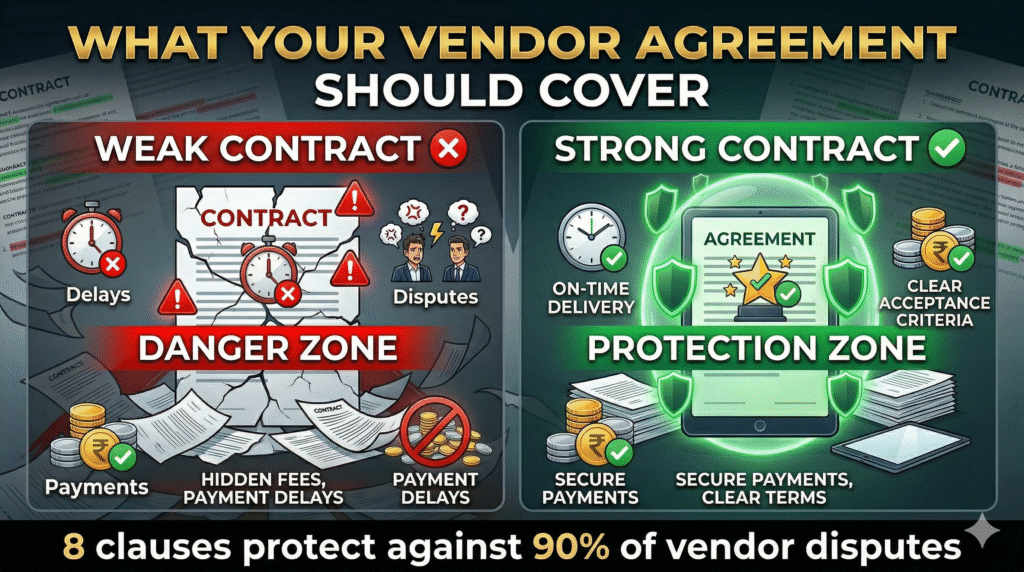
Customize every agreement
Avoid one-size-fits-all templates. Tailor contracts to your business needs.
Be specific and detailed
Clear language reduces ambiguity and strengthens enforceability.
Review regularly
Update agreements as your business grows and requirements change.
Seek professional guidance
Legal expertise ensures that all critical clauses are properly drafted.
Here’s where most businesses get stuck
Even when companies understand the importance of vendor agreements, they struggle with:
- Drafting legally sound clauses
- Identifying hidden risks
- Ensuring compliance
- Handling disputes effectively
This is where expert support becomes crucial.
A smarter approach to vendor agreements
Instead of reacting to problems later, successful businesses take a proactive approach.
They:
- Draft strong, customized agreements
- Identify risks in advance
- Ensure legal compliance
- Protect their business interests at every stage
This approach reduces uncertainty and builds stronger vendor relationships.
You’re closer to protecting your business than you think
If you’ve reached this point, one thing is clear:
Vendor agreements are not just formalities—they are essential tools for risk management and business stability.
A well-drafted agreement can prevent disputes, protect your finances, and ensure smooth operations.
Ready to create strong vendor agreements for your business?
If you want to:
- Avoid costly disputes with vendors
- Protect your business legally
- Ensure clear and enforceable contracts
Then it’s time to take a structured legal approach.
At Innerwork Legal Services, we help businesses draft, review, and optimize vendor agreements tailored to their needs.
Get Started with Innerwork Legal Services
UK Office:
Clockwise Linley House, Dickinson Street, Manchester M1 4LF, United Kingdom
Kolkata Offices:
Martin Burn House, 1 R.N. Mukherjee Rd, Gr Floor, Kolkata 700001 (Working Office)
BJ-74, Salt Lake City, Sector II, Kolkata 700091 (Near Araksha Bhawan)
22, Sukeas Lane, 5th Floor, Kolkata 700001 (Registered Office)
Call / WhatsApp: (+91) 98302 32051
Email: info@innerworklegalservices.com
Take the next step and ensure your business agreements are built to protect, not just to formalize.