
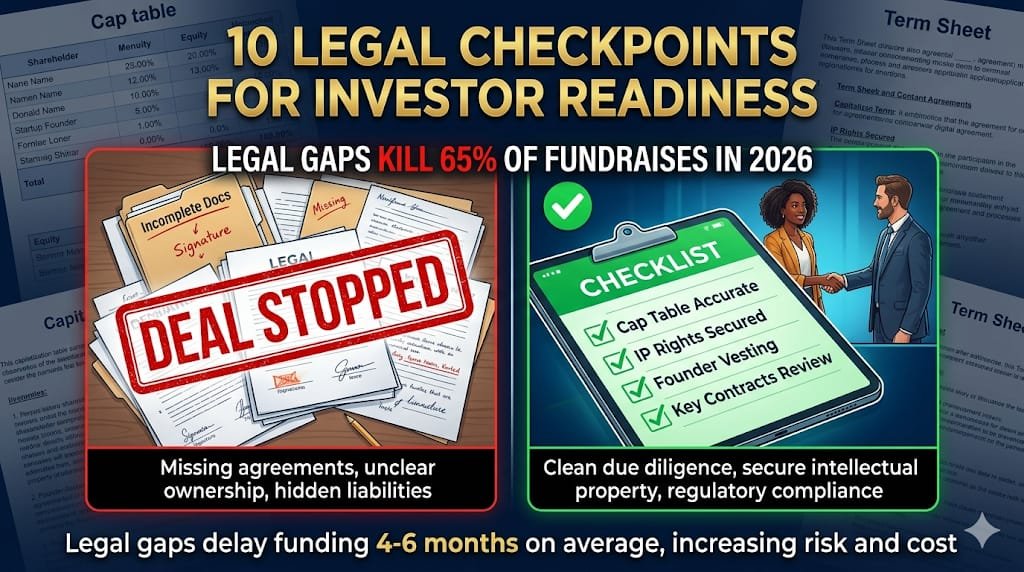
Planning to raise funds—but is your startup legally prepared?
Have you ever focused entirely on your pitch deck, product, and investor meetings while assuming the legal side can be handled later? Many founders do exactly that.
But investors don’t just evaluate ideas—they evaluate risk.
If your startup lacks proper legal structure, documentation, or compliance, even a strong business idea may struggle to secure funding.
The reality: Investors avoid startups with legal gaps
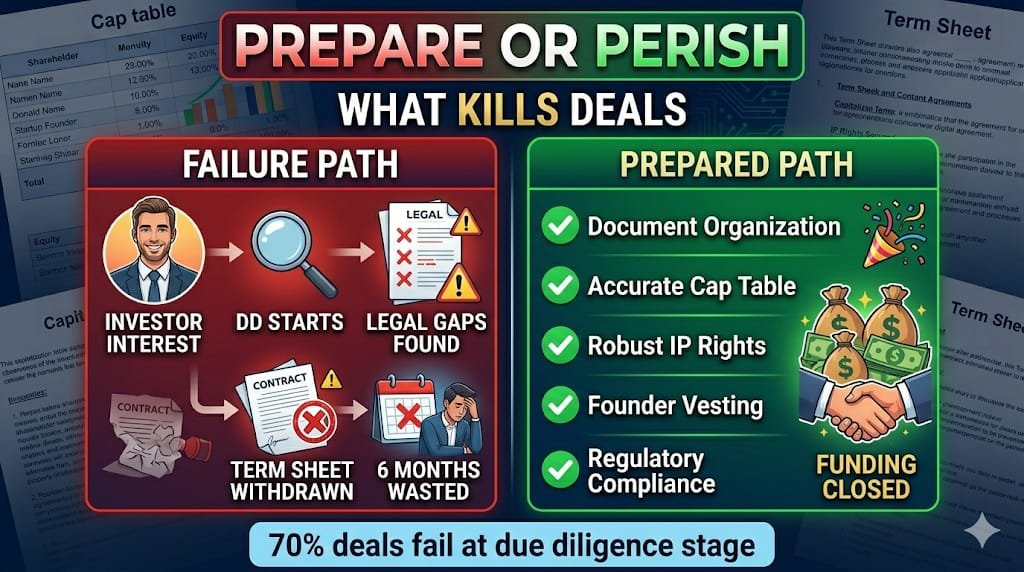
A startup once gained investor interest quickly because of strong market traction. But during due diligence, investors discovered incomplete founder agreements and missing compliance filings.
The funding process stalled.
This happens more often than founders expect. Investors want clarity, structure, and legal readiness before committing capital.
Why startups often ignore legal preparation
1. Focus on growth over structure
Founders prioritize product development and customer acquisition.
Result: Legal foundations remain weak
2. Limited awareness
Many startups are unsure about what investors legally expect.
Result: Missing documents and compliance gaps
3. Delaying professional support
Legal structuring is often postponed to reduce early costs.
Result: Bigger complications later
4. Rushed fundraising process
Startups move quickly once investor interest appears.
Result: Poor preparation during due diligence
Now imagine entering investor meetings fully prepared
Think about presenting your startup with:
- Proper incorporation and compliance
- Clear founder and shareholder agreements
- Organized financial and legal records
- Strong intellectual property protection
This immediately increases investor confidence and reduces delays during due diligence.
Legal checklist every startup must complete before fundraising
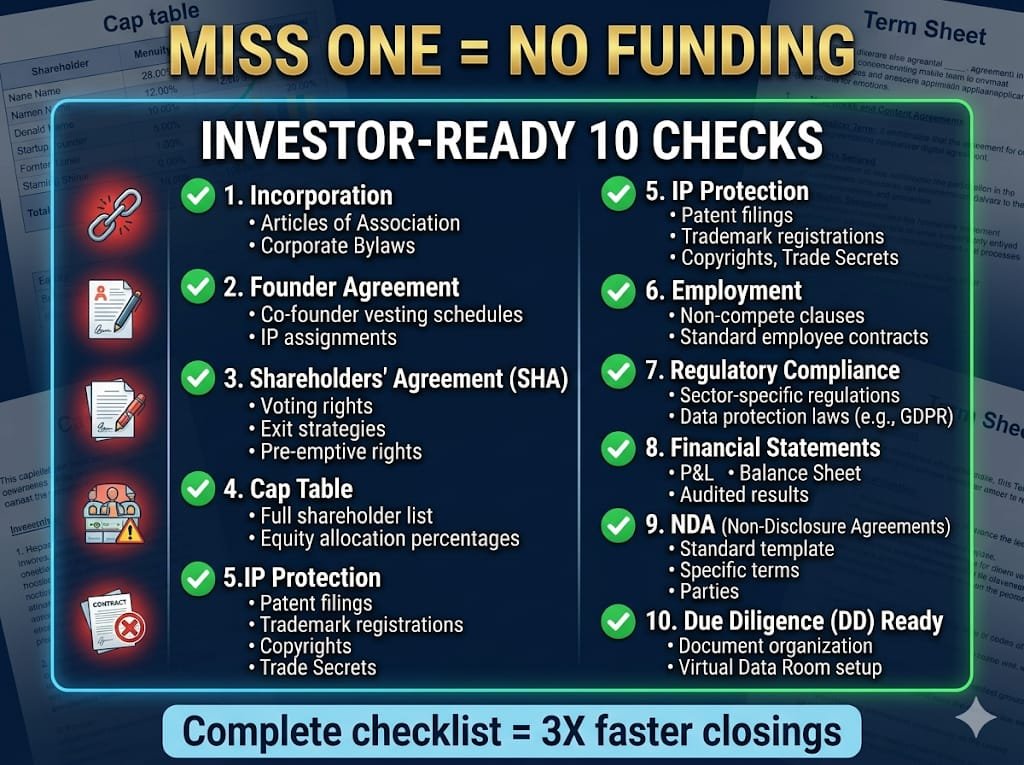
1. Proper business incorporation
Ensure your startup is legally registered with the correct structure, such as:
- Private Limited Company
- LLP
- OPC
2. Founder agreement
Clearly define:
- Founder roles and responsibilities
- Equity ownership
- Decision-making rights
- Exit clauses
This prevents future disputes.
3. Shareholder agreement
A properly drafted shareholder agreement protects both founders and investors.
4. Cap table management

Maintain a clear capitalization table showing:
- Equity ownership
- Investor holdings
- ESOP allocations
5. Intellectual property protection
Secure ownership of:
- Brand names
- Logos
- Software or product IP
- Trade secrets
6. Employment and contractor agreements
Ensure employees and freelancers have proper agreements with:
- Confidentiality clauses
- IP assignment clauses
7. Compliance filings
Complete all mandatory filings such as:
- ROC filings
- Tax filings
- GST compliance (if applicable)
8. Financial documentation
Prepare:
- Financial statements
- Revenue records
- Tax documents
- Forecasts and projections
9. NDA and confidentiality protection
Use Non-Disclosure Agreements when sharing sensitive information with third parties.
10. Due diligence readiness
Keep all legal and operational documents organized and accessible.
Common legal mistakes startups make before fundraising
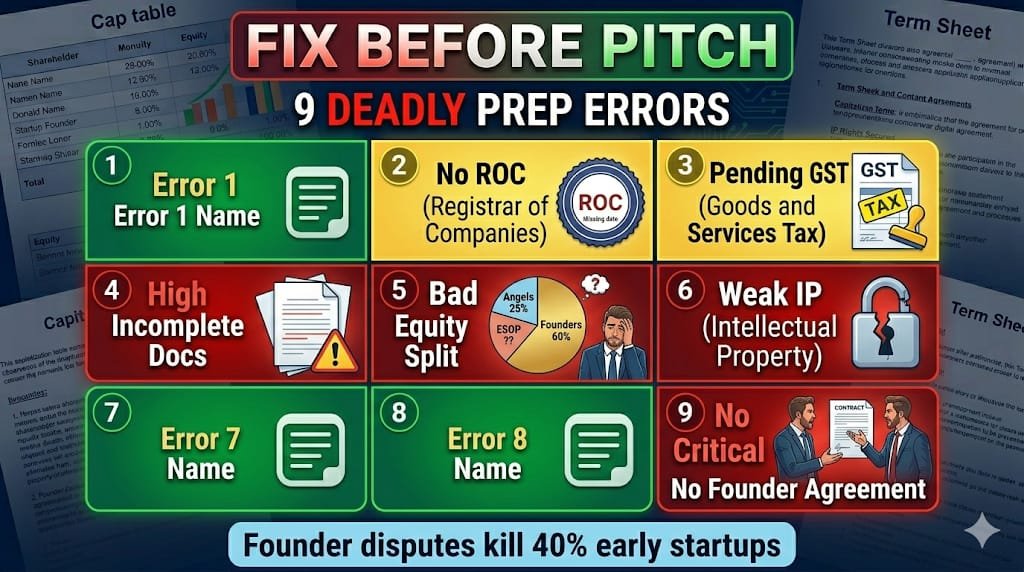
Incomplete documentation
Missing agreements create investor concerns.
Unclear equity structure
Poor cap table management creates confusion.
Ignoring compliance
Pending filings or penalties reduce credibility.
Weak IP ownership
Unprotected intellectual property creates risk during investment.
How to prepare your startup for investor due diligence

Organize all documents
Maintain structured digital records.
Review agreements carefully
Ensure all contracts are legally valid and updated.
Identify legal risks early
Fix compliance or ownership issues before investors discover them.
Seek professional guidance
Legal experts help ensure investor readiness.
Here’s where most founders get stuck
Even after understanding investor expectations, startups struggle with:
- Structuring agreements correctly
- Managing compliance
- Organizing due diligence documents
- Understanding legal risks
This is where professional support becomes valuable.
A smarter approach to fundraising readiness
Successful startups prepare before investors ask questions.
They:
- Build strong legal foundations early
- Maintain organized documentation
- Ensure compliance consistency
- Protect ownership and intellectual property
This approach increases investor trust and improves funding opportunities.
You’re closer to becoming investor-ready than you think
If you’ve read this far, one thing is clear:
Fundraising is not just about convincing investors—it’s about proving your startup is legally prepared for growth.
Strong legal preparation can make the difference between delayed funding and investor confidence.
Ready to make your startup legally ready for fundraising?
If you want to:
- Avoid legal risks during fundraising
- Improve investor confidence
- Ensure smooth due diligence and compliance
Then it’s time to take a structured legal approach.
At Innerwork Legal Services, we help startups prepare for fundraising with legal structuring, compliance management, agreement drafting, and due diligence support.
Get Started with Innerwork Legal Services
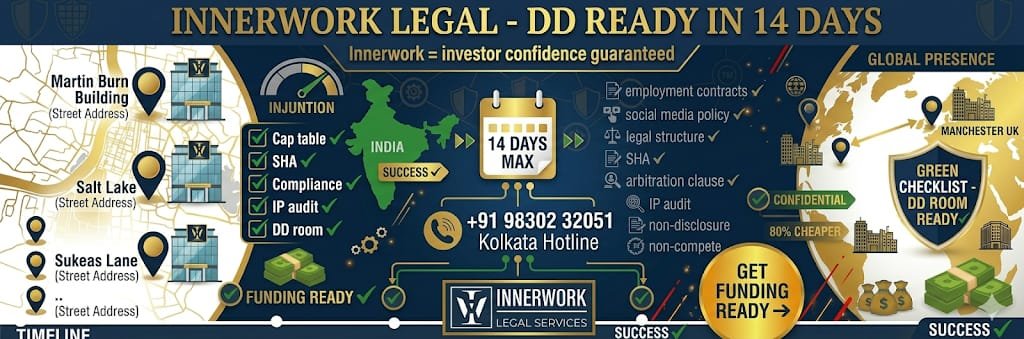
UK Office:
Clockwise Linley House, Dickinson Street, Manchester M1 4LF, United Kingdom
Kolkata Offices:
Martin Burn House, 1 R.N. Mukherjee Rd, Gr Floor, Kolkata 700001 (Working Office)
BJ-74, Salt Lake City, Sector II, Kolkata 700091 (Near Araksha Bhawan)
22, Sukeas Lane, 5th Floor, Kolkata 700001 (Registered Office)
Call / WhatsApp: (+91) 98302 32051
Email: info@innerworklegalservices.com
Take the next step and prepare your startup for funding with confidence and legal clarity.