

Are you raising funds without fully understanding the legal risks?
Have you ever focused so much on pitching your startup that the legal details felt secondary? It’s a common pattern—founders prioritize closing the deal, assuming legal aspects can be handled later.
But fundraising is not just about securing capital. It involves legal agreements, ownership structures, and compliance obligations that can shape your startup’s future.
Ignoring these risks early can lead to serious complications later.
The reality: Legal risks often surface after the deal is done

A startup once raised funds quickly without carefully reviewing investor agreements. Months later, disputes arose over control rights and decision-making authority.
By then, the terms were already binding.
This is more common than most founders realize. Legal risks in fundraising rarely show up immediately—they appear when it’s too late to fix them easily.
Why founders often overlook legal risks
1. Urgency to secure funding
Founders feel pressure to close deals quickly.
Result: Legal terms are not reviewed thoroughly
2. Complex documentation
Agreements like term sheets and shareholder agreements can be difficult to interpret.
Result: Misunderstanding critical clauses
3. Lack of legal guidance
Many startups proceed without expert support.
Result: Increased exposure to risk
4. Investor-driven terms
Founders may accept terms without negotiation.
Result: Unfavorable conditions
Now imagine raising funds with full legal clarity
Think about entering a funding round with:
- Clear understanding of every clause
- Balanced agreements that protect your interests
- Proper compliance with legal requirements
- Confidence in your ownership and control
This approach reduces risk and strengthens investor relationships.
Common legal risks in startup fundraising
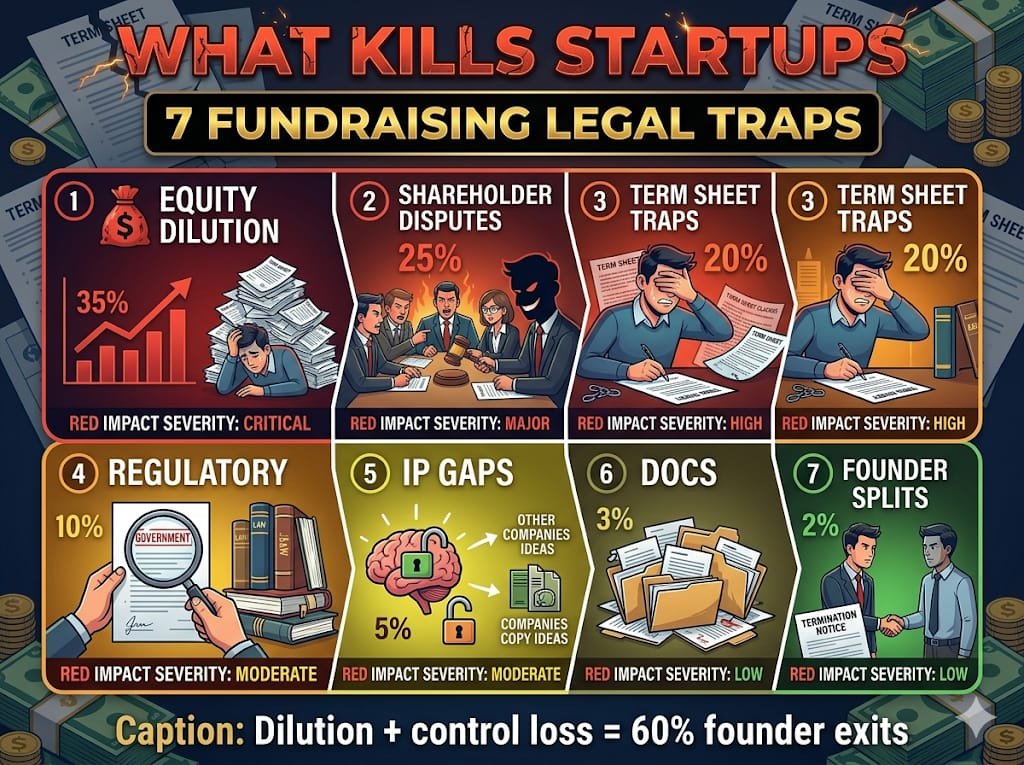
1. Equity dilution issues
Giving away too much equity early can reduce founder control and long-term value.

2. Unclear shareholder agreements
Poorly drafted agreements can lead to:
- Disputes over decision-making
- Conflicts between founders and investors
3. Misunderstood term sheet clauses
Key clauses include:
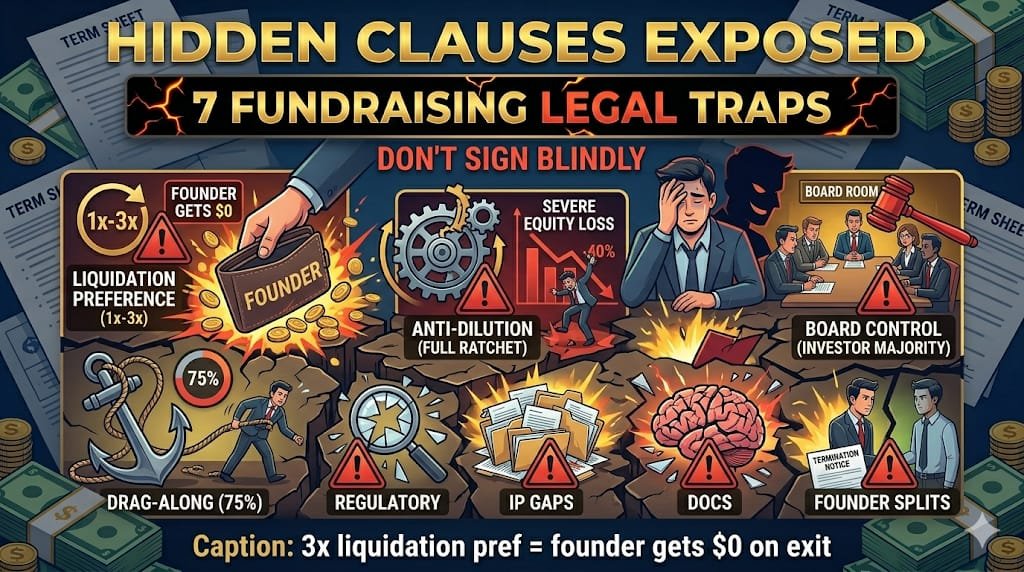
- Liquidation preference
- Anti-dilution rights
- Voting rights
Misunderstanding these can impact future returns and control.
4. Non-compliance with regulations
Startups must comply with:
- Company law
- Securities regulations
Failure to comply can lead to penalties or invalid agreements.
5. Intellectual property ownership issues
If IP ownership is unclear, it can create problems during due diligence.
6. Incomplete documentation
Missing or disorganized records can delay funding or raise red flags.
7. Founder agreement gaps
Unclear roles, responsibilities, or equity distribution among founders can cause internal conflicts.
How to reduce legal risks in fundraising
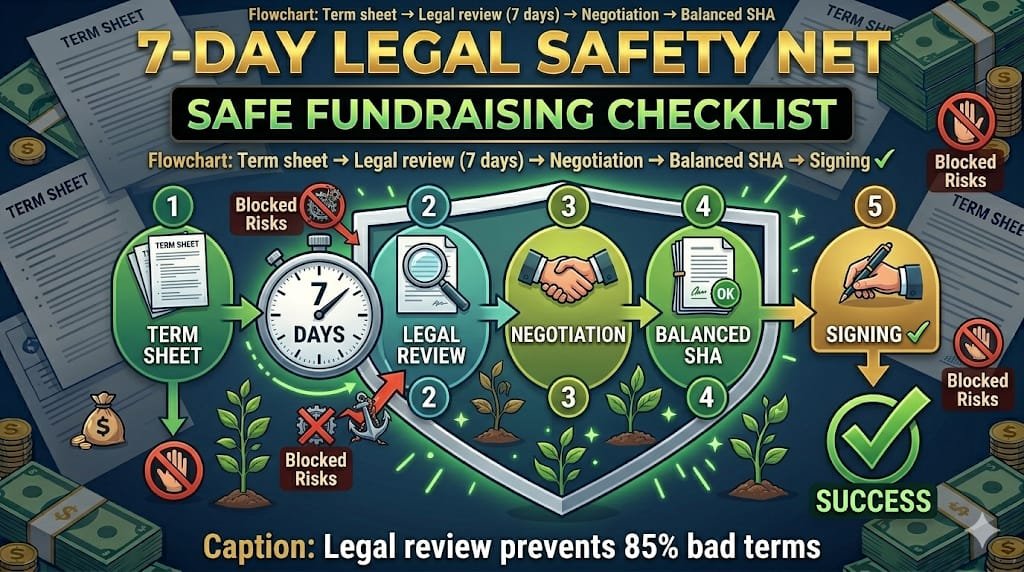
Understand every agreement
Never sign documents without fully understanding them.
Structure equity carefully
Plan ownership with long-term growth in mind.
Ensure legal compliance
Follow all regulatory requirements from the beginning.
Maintain proper documentation
Keep all legal and financial records organized.
Seek professional guidance
Experts can identify risks and help you negotiate better terms.
Here’s where most founders get stuck
Even when founders recognize the importance of legal clarity, they struggle with:
- Interpreting complex legal terms
- Negotiating with investors
- Ensuring compliance
- Balancing speed with caution
This is where professional support becomes essential.
A smarter approach to startup fundraising
Successful founders take a proactive approach by:
- Preparing legal structures before raising funds
- Reviewing and negotiating agreements carefully
- Identifying risks early
- Ensuring long-term protection
This approach increases investor confidence and safeguards founder interests.
You’re closer to raising funds safely than you think
If you’ve read this far, one thing is clear:
Fundraising is not just about getting investment—it’s about getting it right.
Avoiding legal risks early can protect your startup’s future and prevent costly disputes.
Ready to raise funds without legal risks?
If you want to:
- Protect your ownership and control
- Avoid legal complications
- Ensure smooth and compliant fundraising
Then it’s time to take a structured legal approach.
At Innerwork Legal Services, we help startups navigate fundraising legally—reviewing agreements, ensuring compliance, and protecting founder interests.
Get Started with Innerwork Legal Services

UK Office:
Clockwise Linley House, Dickinson Street, Manchester M1 4LF, United Kingdom
Kolkata Offices:
Martin Burn House, 1 R.N. Mukherjee Rd, Gr Floor, Kolkata 700001 (Working Office)
BJ-74, Salt Lake City, Sector II, Kolkata 700091 (Near Araksha Bhawan)
22, Sukeas Lane, 5th Floor, Kolkata 700001 (Registered Office)
Call / WhatsApp: (+91) 98302 32051
Email: info@innerworklegalservices.com
Take the next step and raise funds with confidence and legal clarity.