
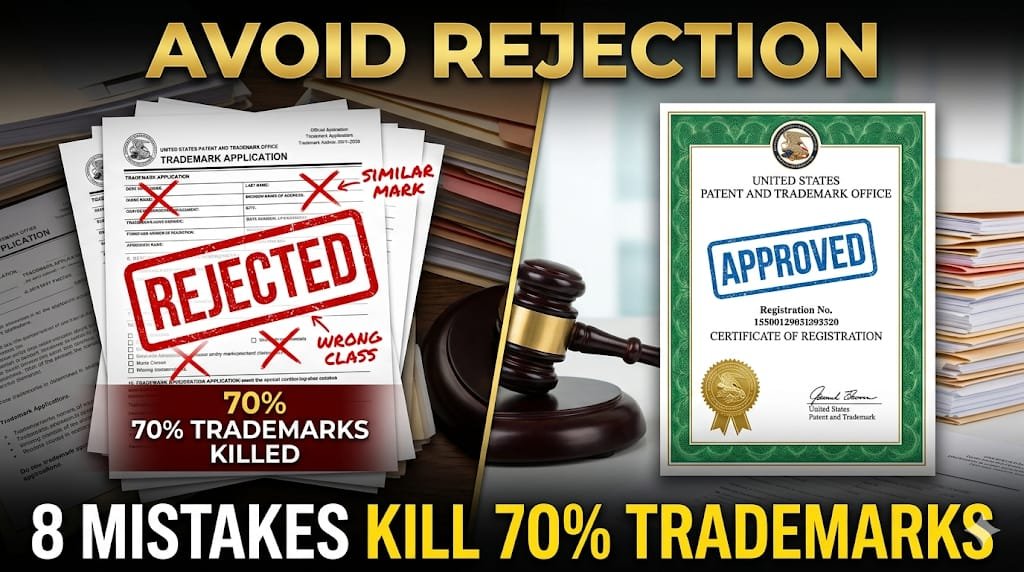
Is your trademark application at risk of rejection?
Have you ever come up with a brand name you love—only to worry whether it will actually get approved? Many businesses assume trademark registration is straightforward, but in reality, even small mistakes can lead to rejection.
A rejected trademark application doesn’t just delay your brand protection—it can force you to rebrand, lose market identity, or face legal challenges later.
The reality: Many trademark applications fail due to avoidable errors
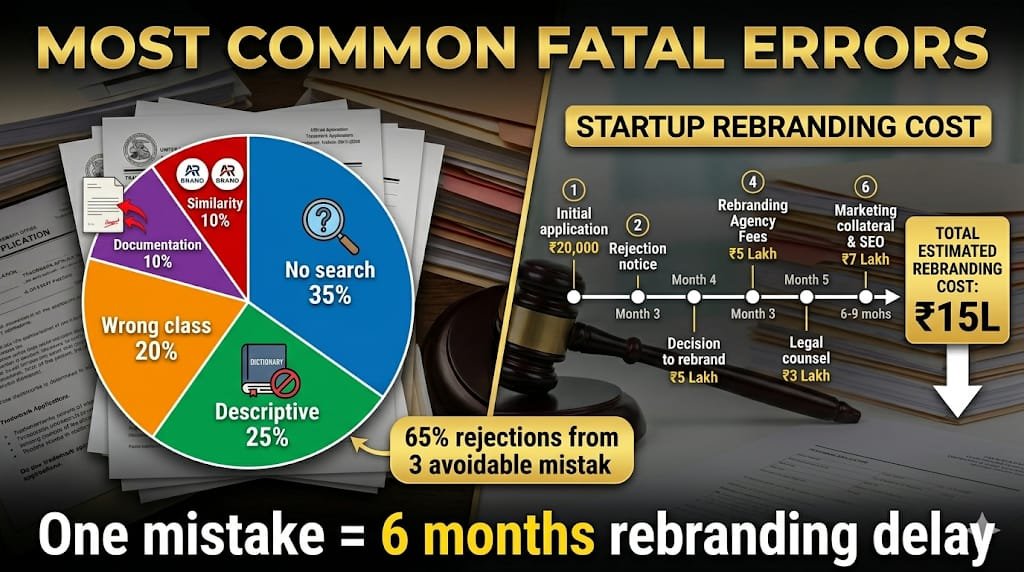
A startup once invested heavily in branding and marketing, only to have its trademark application rejected because the name was too similar to an existing registered mark.
They had to start over.
This situation is more common than most businesses expect.
Trademark rejection is often not about bad ideas—it’s about mistakes in the application process.
Why trademark applications often get rejected
1. Lack of proper research
Many applicants skip a detailed trademark search.
Result: Conflict with existing registered marks
2. Choosing descriptive or generic names
Names that directly describe the product or service lack distinctiveness.
Result: Application gets rejected
3. Incorrect classification
Trademarks must be filed under the correct class of goods or services.
Result: Misclassification leads to rejection or limited protection
4. Incomplete or incorrect documentation
Errors in forms or missing details can cause delays or rejection.
Result: Application becomes invalid
Now imagine securing your trademark without complications
Think about registering your trademark with:
- A unique and distinctive name
- Proper classification
- Accurate documentation
- No conflicts with existing trademarks
This ensures smooth approval and strong brand protection from the beginning.
Common trademark mistakes that get applications rejected
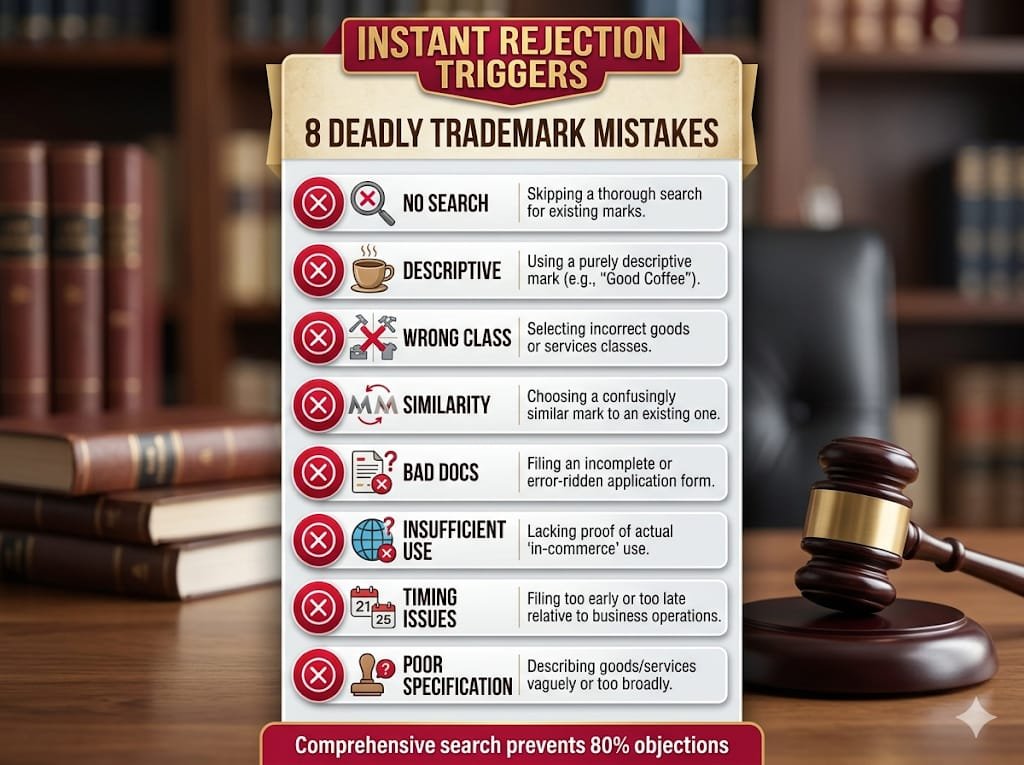
1. Not conducting a comprehensive trademark search
Failing to check existing trademarks can lead to:
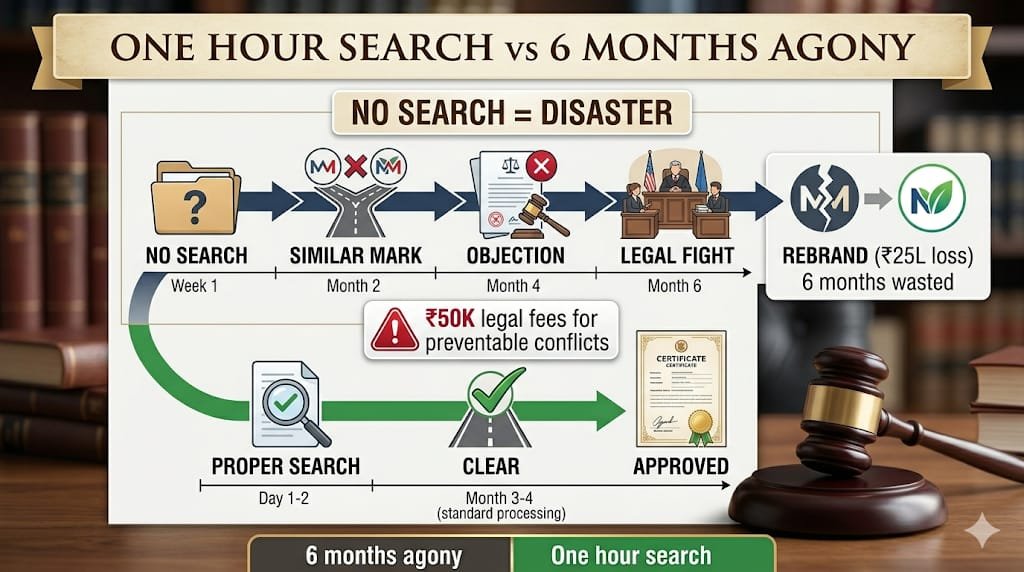
- Objections
- Legal disputes
- Rejection
2. Selecting a weak or non-distinctive mark
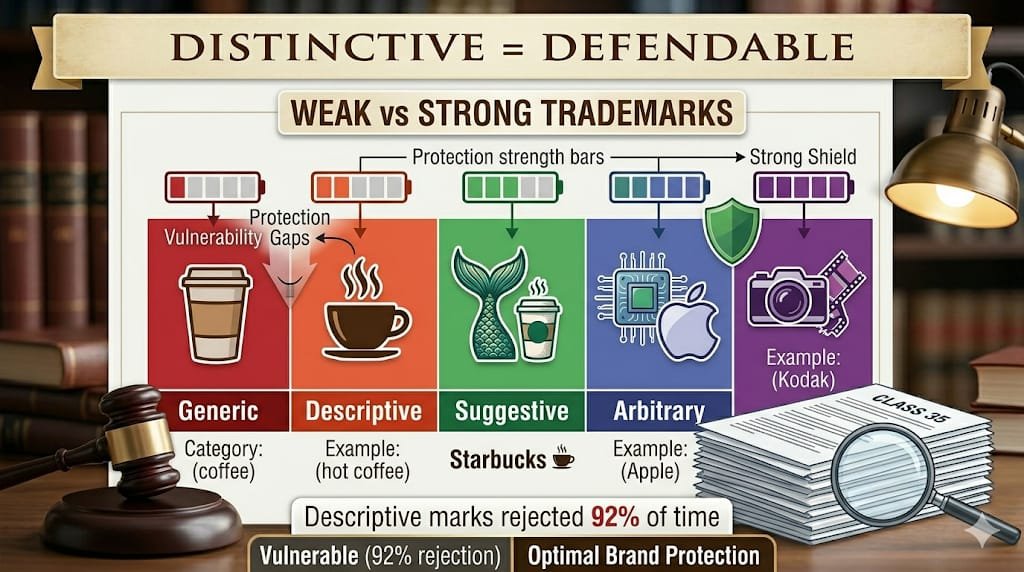
Generic or descriptive names are difficult to protect legally.
3. Filing under the wrong trademark class
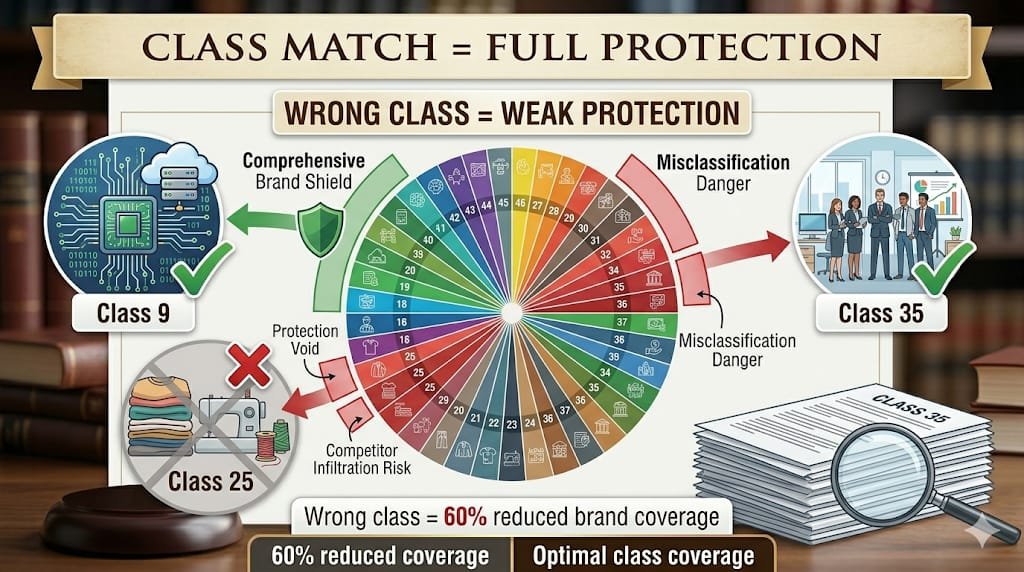
Each business category has specific classes. Choosing the wrong one affects protection.
4. Ignoring similarity with existing marks
Even slight phonetic or visual similarities can lead to objections.
5. Incorrect applicant details
Errors in:
- Name
- Address
- Ownership details
can invalidate the application.
6. Poor description of goods or services
Unclear or incorrect descriptions weaken the application.
7. Not responding to examination reports
Ignoring objections or delays in response can lead to rejection.
8. Lack of professional guidance
Handling the process without expertise increases the chances of errors.
How to avoid trademark rejection
Conduct a thorough search
Check for similar existing trademarks before applying.
Choose a distinctive name
Create a brand name that is unique and legally strong.
File under the correct class
Ensure accurate classification for proper protection.
Submit accurate documentation
Double-check all details before filing.
Respond to objections promptly
Handle examination reports with proper legal support.
Seek expert assistance
Professional guidance improves approval chances significantly.
Here’s where most businesses get stuck
Even after understanding the process, businesses struggle with:
- Identifying potential conflicts
- Choosing the right class
- Handling objections
- Completing the process correctly
This is where legal expertise becomes essential.
A smarter approach to trademark registration
Successful businesses take a structured approach by:
- Conducting detailed research
- Filing strong applications
- Avoiding common mistakes
- Ensuring long-term brand protection
This not only increases approval chances but also strengthens brand identity.
You’re closer to securing your brand than you think
If you’ve read this far, one thing is clear:
Trademark registration is not just a formality—it’s a critical step in protecting your business identity.
Avoiding mistakes early can save time, cost, and future complications.
Ready to register your trademark the right way?
If you want to:
- Avoid rejection and delays
- Protect your brand legally
- Ensure a smooth registration process
Then it’s time to take a structured legal approach.
At Innerwork Legal Services, we help businesses with trademark search, filing, and end-to-end registration—ensuring accuracy and strong protection.
Get Started with Innerwork Legal Services
UK Office:
Clockwise Linley House, Dickinson Street, Manchester M1 4LF, United Kingdom
Kolkata Offices:
Martin Burn House, 1 R.N. Mukherjee Rd, Gr Floor, Kolkata 700001 (Working Office)
BJ-74, Salt Lake City, Sector II, Kolkata 700091 (Near Araksha Bhawan)
22, Sukeas Lane, 5th Floor, Kolkata 700001 (Registered Office)
Call / WhatsApp: (+91) 98302 32051
Email: info@innerworklegalservices.com
Take the next step and secure your brand with confidence.